What Happens Before a Cremation Memorial
A practical guide to the decisions families make before a cremation memorial, from choosing a date to preparing readings and personal tributes.

Before a cremation memorial, families usually make several decisions about timing, location, participation, and personal details. For those researching funeral homes in Schofield, WI, understanding these steps can make it easier to discuss the plan with relatives. At John J. Buettgen Funeral Home, we encourage families to start with their loved one's wishes and the traditions that matter most.
A cremation memorial is a gathering to remember someone, whether it takes place shortly after a death or at a later date. Cremation and the memorial are separate parts of the arrangements, so families can decide when and how people gather. A memorial can include religious customs, cultural practices, music, photographs, readings, and personal stories without following one fixed format.
Clarifying the Difference Between Cremation and a Memorial
Cremation is a final disposition, while a memorial gives relatives and friends a chance to gather in remembrance. A memorial may occur before or after cremation, though families often hold one afterward when scheduling or travel requires more time.
Understanding this distinction helps families avoid assuming they must do everything at once. Cremation arrangements involve specific practical steps, while memorial planning focuses on how people will remember and honor the individual.
The memorial itself may be formal or informal. Some families prefer a structured gathering with readings and music, while others choose a smaller occasion centered on conversation and shared memories.
Making the First Planning Decisions
Before choosing flowers, photographs, or music, families benefit from discussing the gathering's basic shape. These early decisions establish a foundation for the details that follow and help relatives understand what is being planned.
A useful starting checklist includes:
- Timing: Decide whether the gathering should take place soon or allow additional time for travel and preparation.
- Location: Consider a suitable venue, family home, or another appropriate gathering space.
- Attendance: Discuss whether the memorial will be private, extended-family focused, or open to a wider community.
- Traditions: Identify religious, cultural, or family customs that should be respected.
- Participation: Decide who may wish to speak, offer a reading, provide music, or contribute photographs.
- Personal details: Choose a few elements that reflect the person's interests, relationships, and values.
Families can review how funeral arrangements and planning steps typically work while considering which decisions need attention first.
Understanding the Timeline Before the Gathering

The period before a cremation memorial varies because families have different circumstances, traditions, and scheduling needs. No single timetable suits everyone, and the memorial date doesn't necessarily need to match the cremation timing.
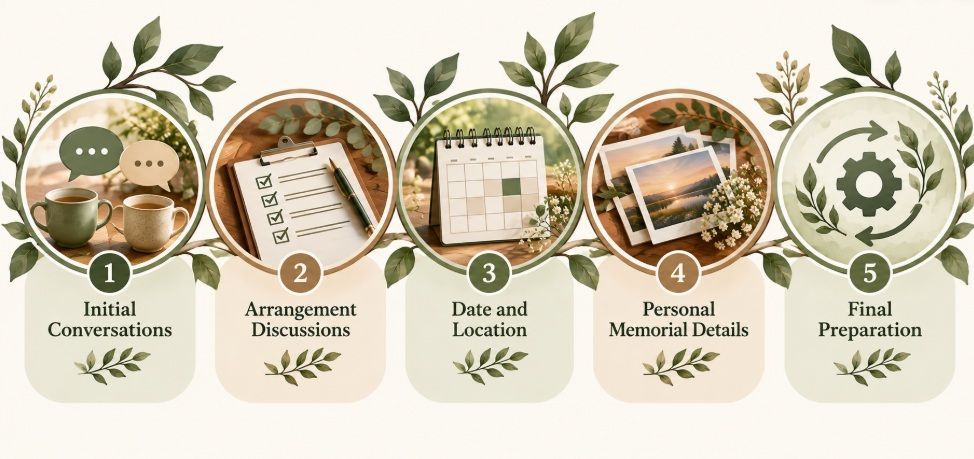
The following table shows common planning stages and what families may wish to consider during each one.
| Planning stage | What families typically consider | Helpful preparation |
|---|---|---|
| Initial conversations | Personal wishes, family traditions, and immediate priorities | Identify key relatives and any known preferences |
| Arrangement discussions | Cremation arrangements and memorial possibilities | Prepare questions about available options |
| Date and location | Travel, attendance, and venue suitability | Check important family schedules |
| Memorial details | Readings, music, photographs, and participation | Gather meaningful materials and invite contributors |
| Final preparation | Order of events and practical coordination | Confirm responsibilities and share gathering information |
These stages may overlap. For example, relatives can collect photographs while discussing a date. The table is a planning guide, not a required sequence, and families can adapt it to their circumstances.
Choosing Meaningful Ways to Remember Someone
Once the practical details begin to take shape, families can focus on what will make the memorial recognizable as a tribute to their loved one. The most personal elements often come from familiar stories, favorite activities, and relationships rather than elaborate arrangements.
A person who loved gardening might be remembered through seasonal flowers or outdoor photographs. Someone known for music could be honored with a meaningful song. A family might also invite relatives to share memories that reveal different sides of the person's life.
Our earlier article on how personal touches shape meaningful funeral service memories offers related inspiration for choosing details that genuinely connect to the individual.
Preparing Readings, Music, and Photographs
Families may ask relatives to suggest a reading, choose a song, or contribute photographs. Selecting a few meaningful items usually makes the program easier to follow and gives each contribution room to be appreciated.
It helps to confirm who will present each item and whether the chosen location can accommodate music or visual displays.
Inviting Family and Friends to Participate
Participation can take several forms. One person might share a prepared memory, while another may prefer to help organize photographs or greet guests.
Families can offer opportunities without expecting everyone to speak publicly. Quiet participation can be just as meaningful as a formal tribute.
Preparing for Practical and Family Considerations
Memorial planning also involves practical questions that are easy to overlook when families focus on remembrance. Travel arrangements, accessibility, communication with guests, and the needs of children or older relatives may shape how you organize the gathering.
Families may find it helpful to designate one person to coordinate updates on the date, location, and schedule. This reduces the chance of relatives receiving conflicting information.
A few other considerations deserve attention. The venue should suit the expected gathering, participants should understand their roles, and family members should have opportunities to raise concerns about traditions or personal preferences.
When considering arrangements, you can also discuss flexible payment options. We encourage families to ask questions about available choices without feeling that a meaningful memorial must depend on elaborate details.
Moving Forward With a Memorial That Feels Personal
The time before a cremation memorial is an opportunity to make thoughtful decisions rather than simply complete a checklist. Families can begin with the person's wishes, decide how they want to gather, and gradually choose the readings, music, stories, and traditions that feel appropriate. Some decisions may be straightforward, while others benefit from conversation among relatives.
For families considering funeral homes in Schofield, WI, John J. Buettgen Funeral Home is available to discuss the steps involved in planning a remembrance. Our
information about what families can expect at our location can help you become familiar with the setting before making arrangements. If you would like to talk through your family's priorities and the available memorial choices, please call
(715) 359-2828. We will listen to your questions and help you consider the next steps with care.